crowns of glass : Butterfly helmet
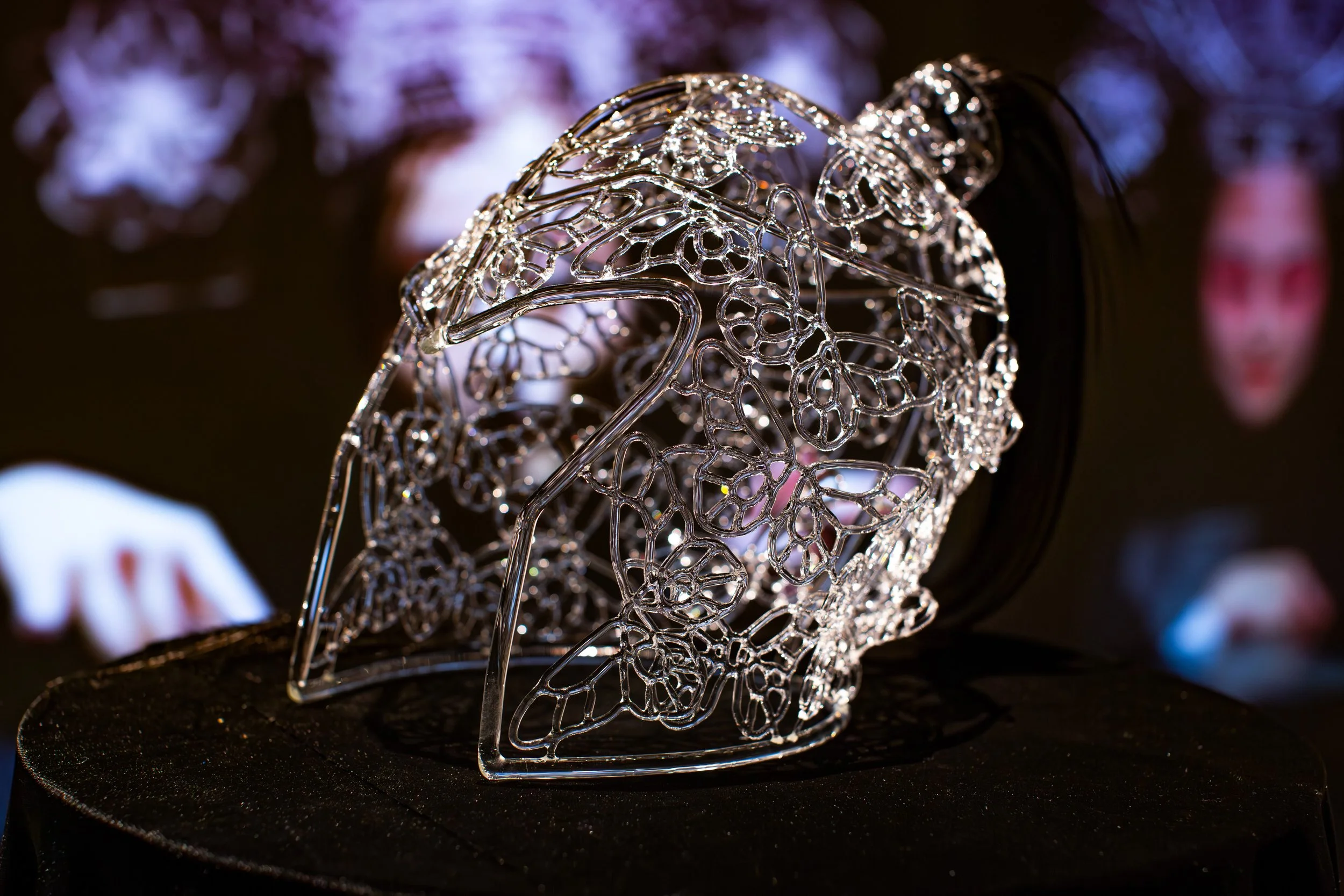
Crowns of Glass : Butterfly Helmet, 2025
Flameworked Borosilicate Glass, Hair
28 x 22 x 30cm
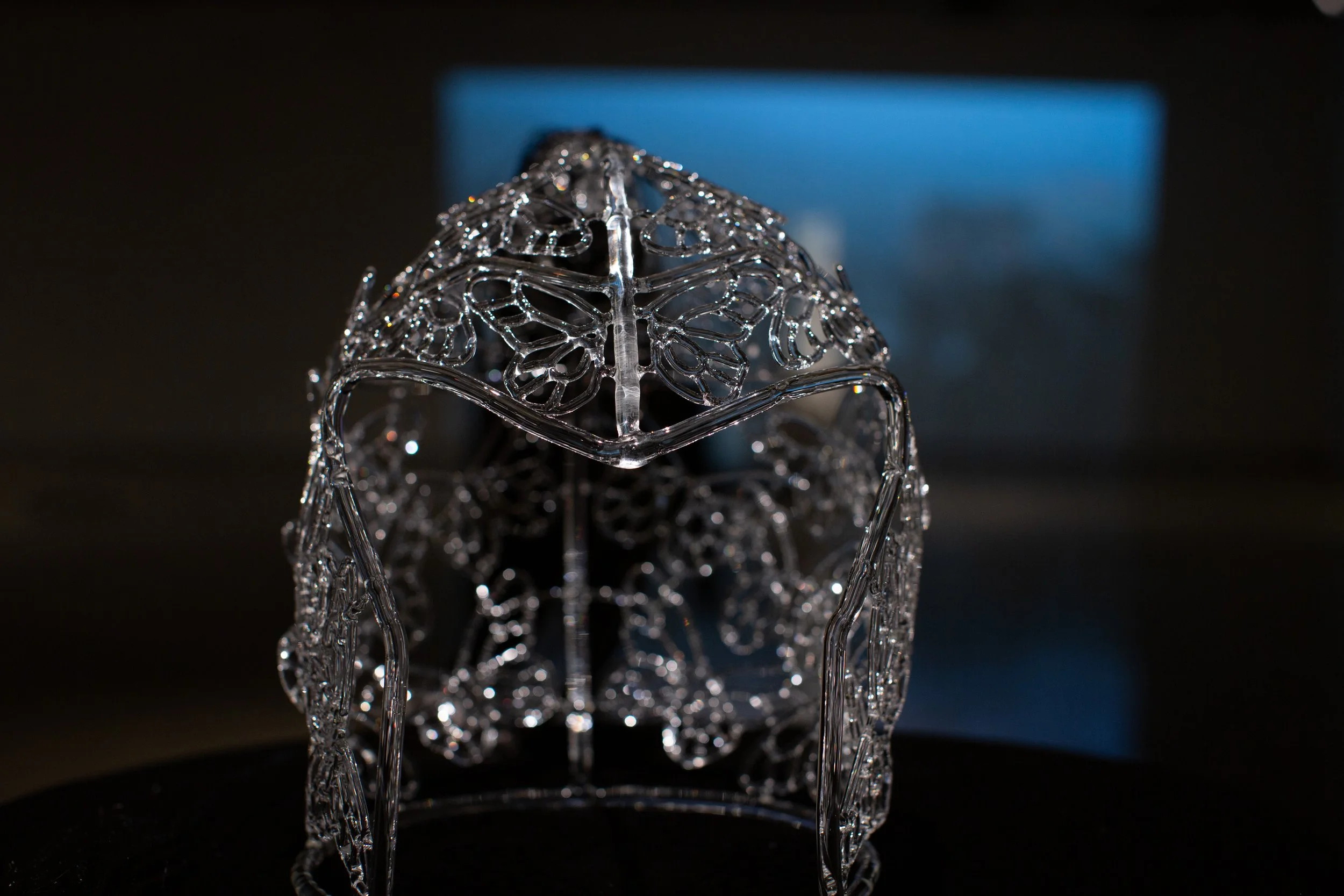
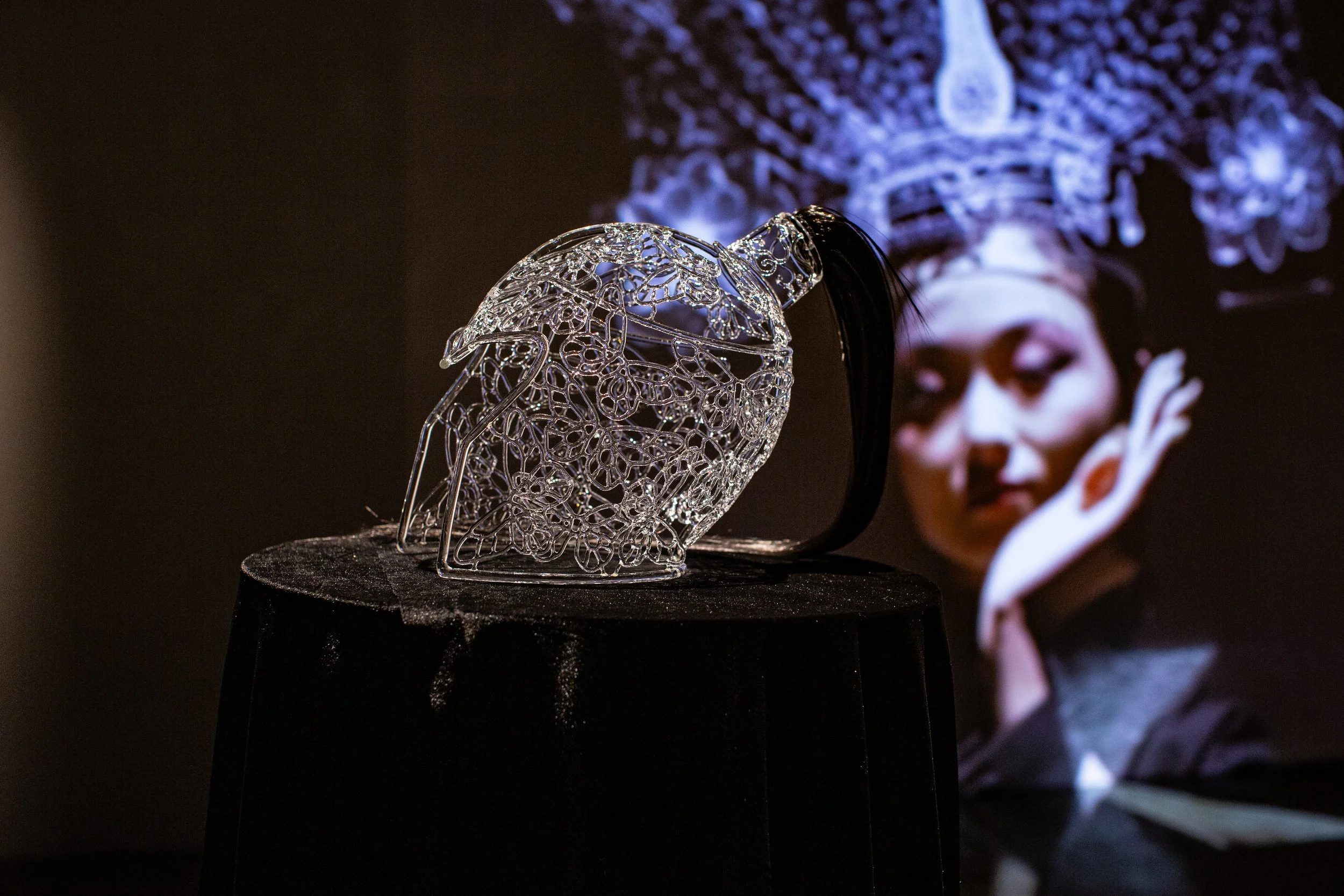
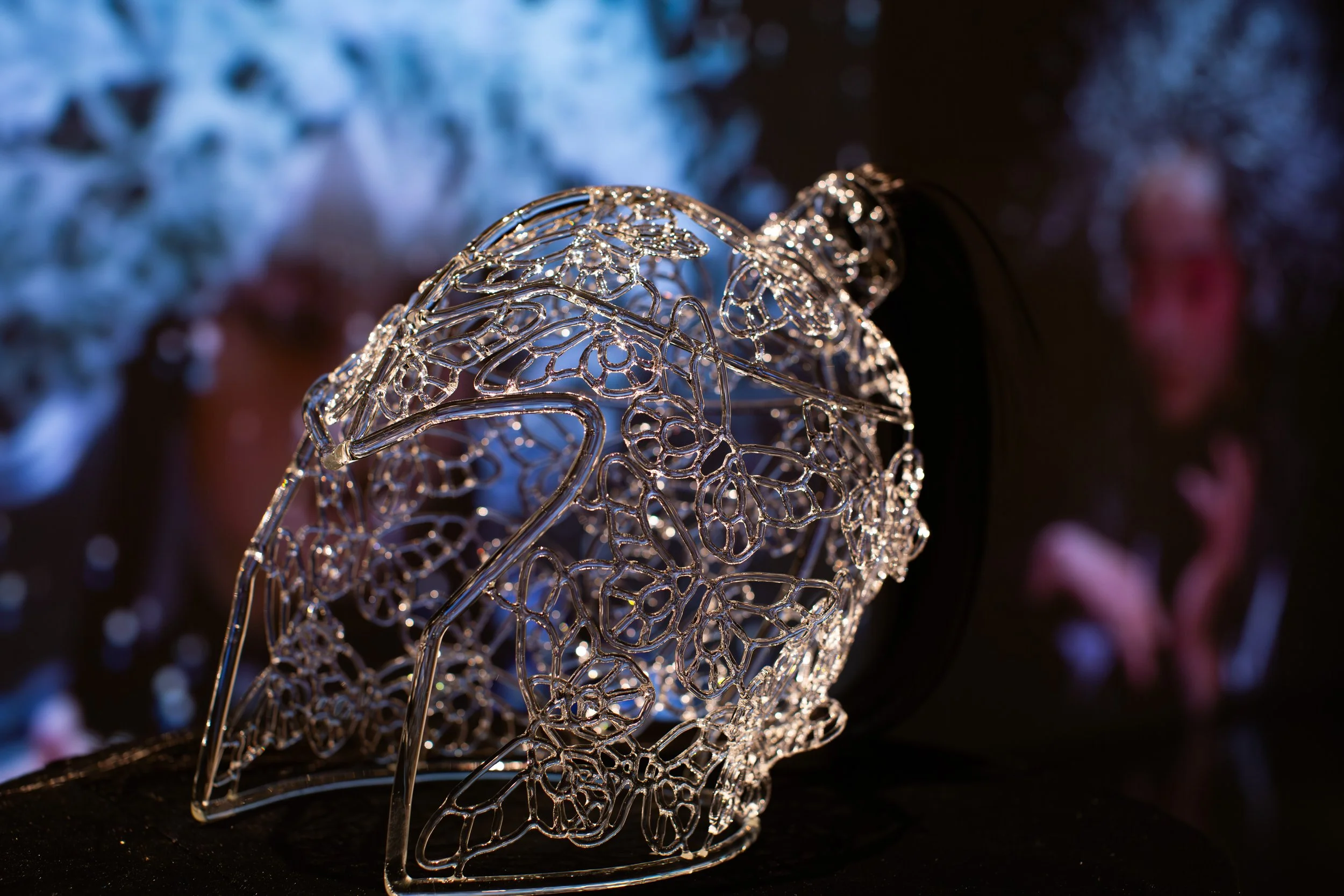
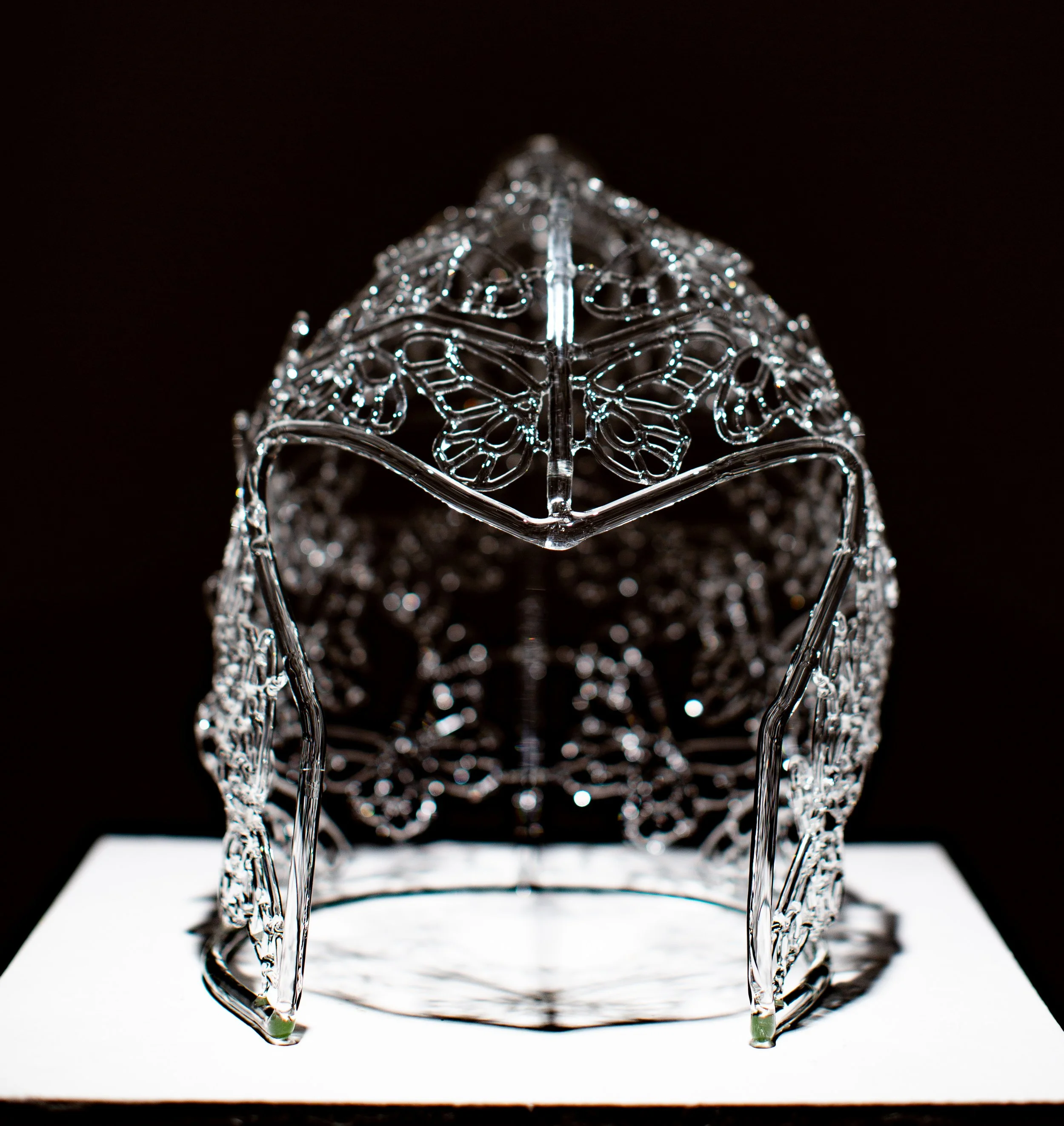
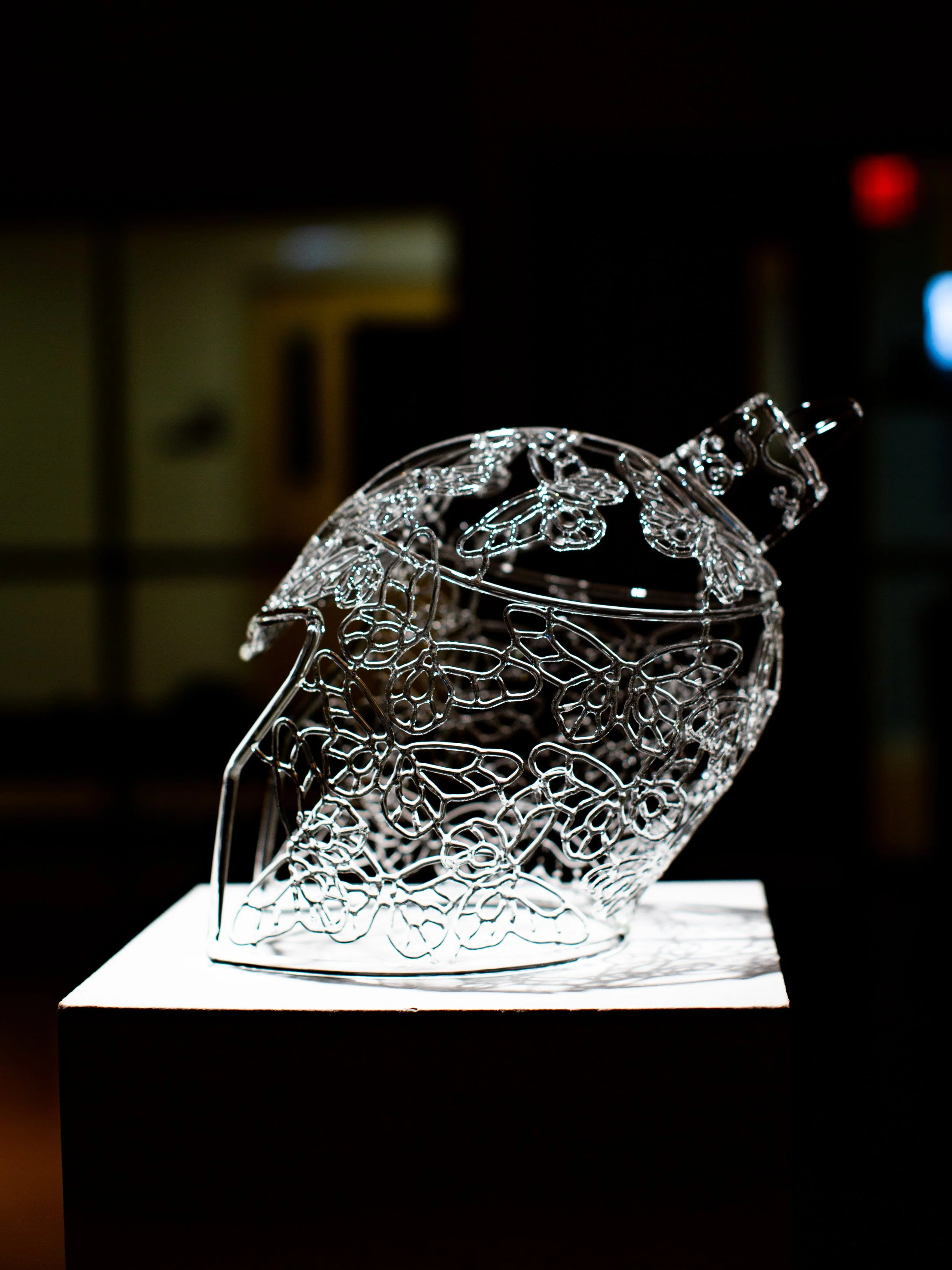
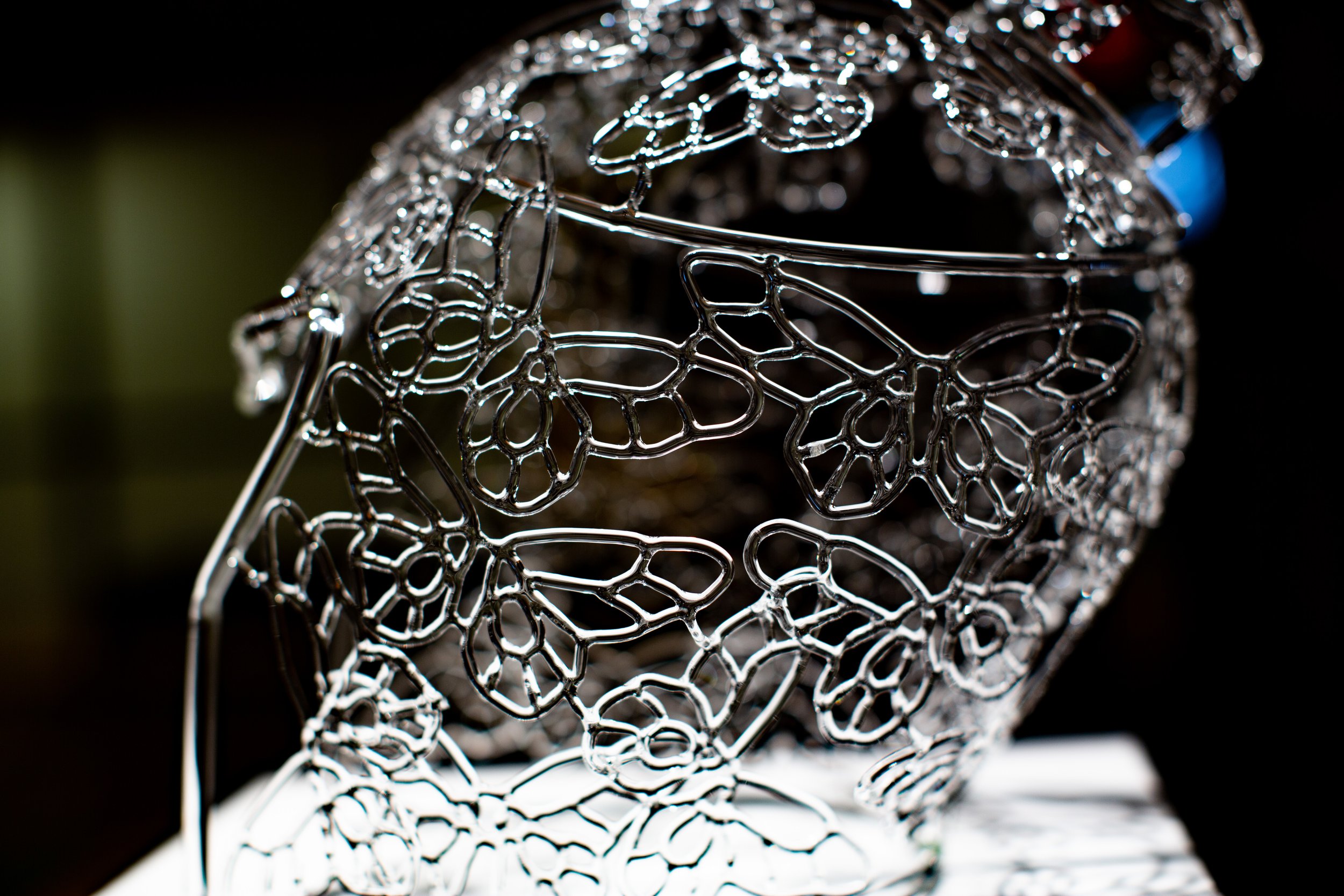
Although the Butterfly Helmet is presented as part of the Crowns of Glass trio alongside the Yang Guifei and Wu Yunzhu headdresses, it is notably distinct in both form and function, and does not appear within the video performance. It is a flameworked glass helmet adorned with the outlines of monarch butterflies, with human hair incorporated as a plume, introducing an element that is intimate and corporeal.
When conceiving the third work in this series, I felt compelled to create something more explicitly personal. The Butterfly Helmet is a symbolic vessel for my lived experience during my time in the United States narrating the prolonged separation from my partner, and the emotional and temporal cost of pursuing this path.
The choice of a Han dynasty–inspired helmet form is deliberate. Before going to the United States from Australia, I was known for my Glass Armour series, particularly my glass helmets, so this form feels intrinsically tied to my artistic identity. Here, it becomes a framework through which I can situate a more personal narrative. The integration of butterflies introduces a layered symbolism. Monarch butterflies, in particular, are defined by migration; their journeys span vast distances across generations, such that the butterfly that departs is not the same one that arrives. This cycle becomes a poignant metaphor for displacement, transformation, and the passage of time.
Beyond this, butterflies carry rich symbolic associations across cultures. In European art history, particularly within 16th-century Dutch vanitas paintings, they signify ephemerality and transformation. Within Chinese cultural contexts, butterflies are often understood as manifestations of the departed, returning briefly to visit the living. There are widely shared stories of butterflies appearing at significant life moments, such as weddings, interpreted as the presence of loved ones who have passed. Philosophically, the motif recalls the well-known “butterfly dream” attributed to Zhuangzi, in which the boundary between dream and reality dissolves: the question of whether one is a man dreaming of being a butterfly, or a butterfly dreaming of being a man, destabilizes any fixed sense of identity. The enduring folktale of the Butterfly Lovers, often referred to as a Chinese equivalent to Romeo and Juliet, further situates the butterfly as a symbol of love and tragic devotion.
These overlapping narratives informed the making of the Butterfly Helmet, through which I began to reflect more directly on my own relationship. In leaving Australia to pursue my artistic ambitions, I entered into a form of distance that is both physical and emotional. My partner, who remained in Australia, often describes his life as being on hold until my return. This sense of suspension is intensified by the life stage we occupy; one in which many of our peers are settling into stability, building homes, and forming families. In contrast, our trajectory is marked by delay, uncertainty, and sacrifice.
Within this context, the helmet takes on additional meaning. Traditionally associated with battle and protection, it becomes a symbol of endurance, of leaving safety and entering into a prolonged and uncertain struggle. It reflects not only my own pursuit, but also the quiet, often invisible sacrifices of those who support that pursuit from a distance. The use of hair as a plume further intensifies this connection. In ancient Chinese wedding traditions, strands of hair from the bride and groom are bound together as a symbol of union signifying an inseparable bond. Here, that gesture is recontextualised: the hair becomes both an emblem of connection and a reminder of separation, binding together two lives that, for a time, must remain apart.