Icarus II
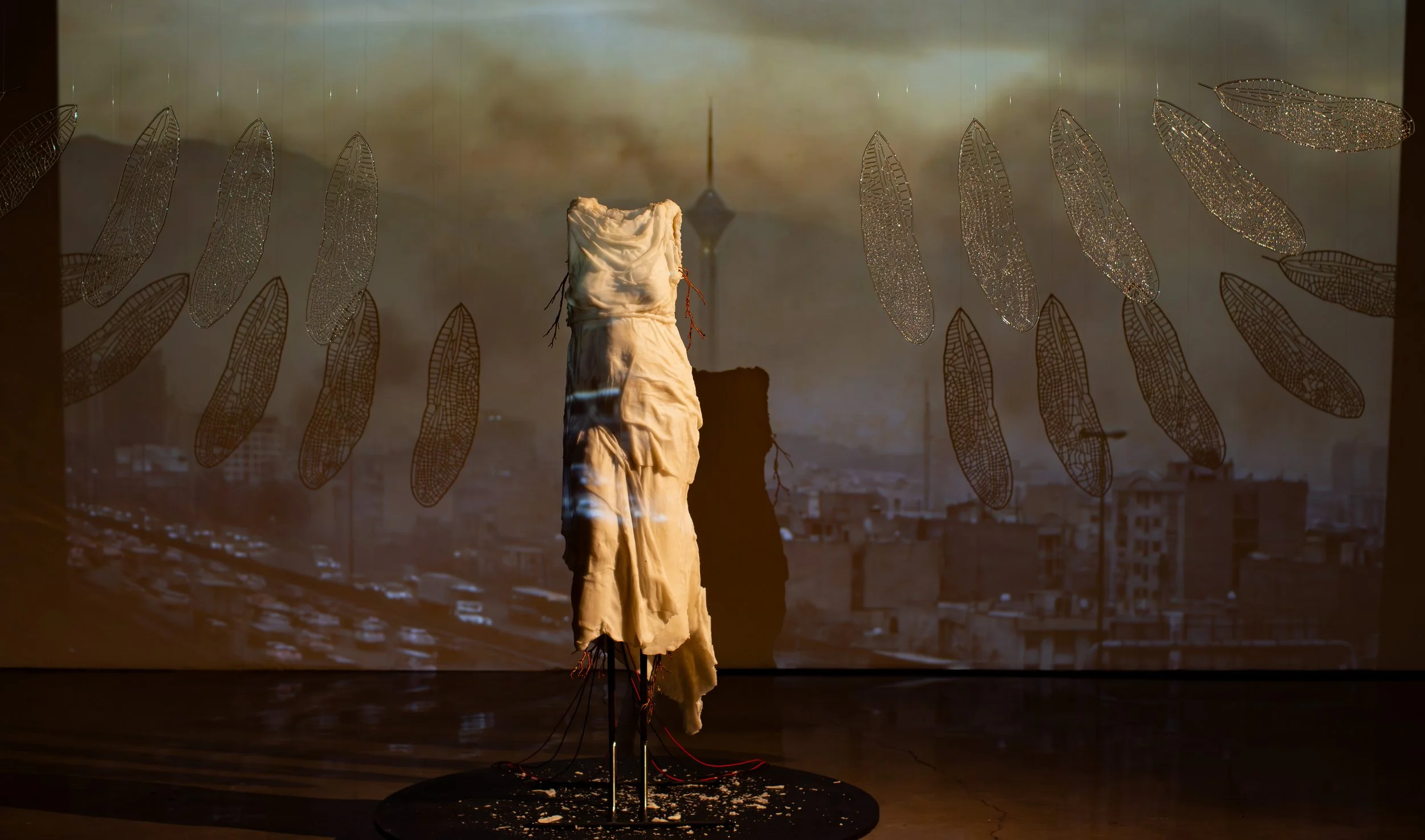
Icarus II, 2026
Installation, Flameworked Borosilicate Glass Wings, Wax Body, Copper Nervous System, Heat Coils, Electronics, Steel, Projection of AI Generated Polluted Cityscapes with Seed Images Taken from News Outlets
Dimensions Variable
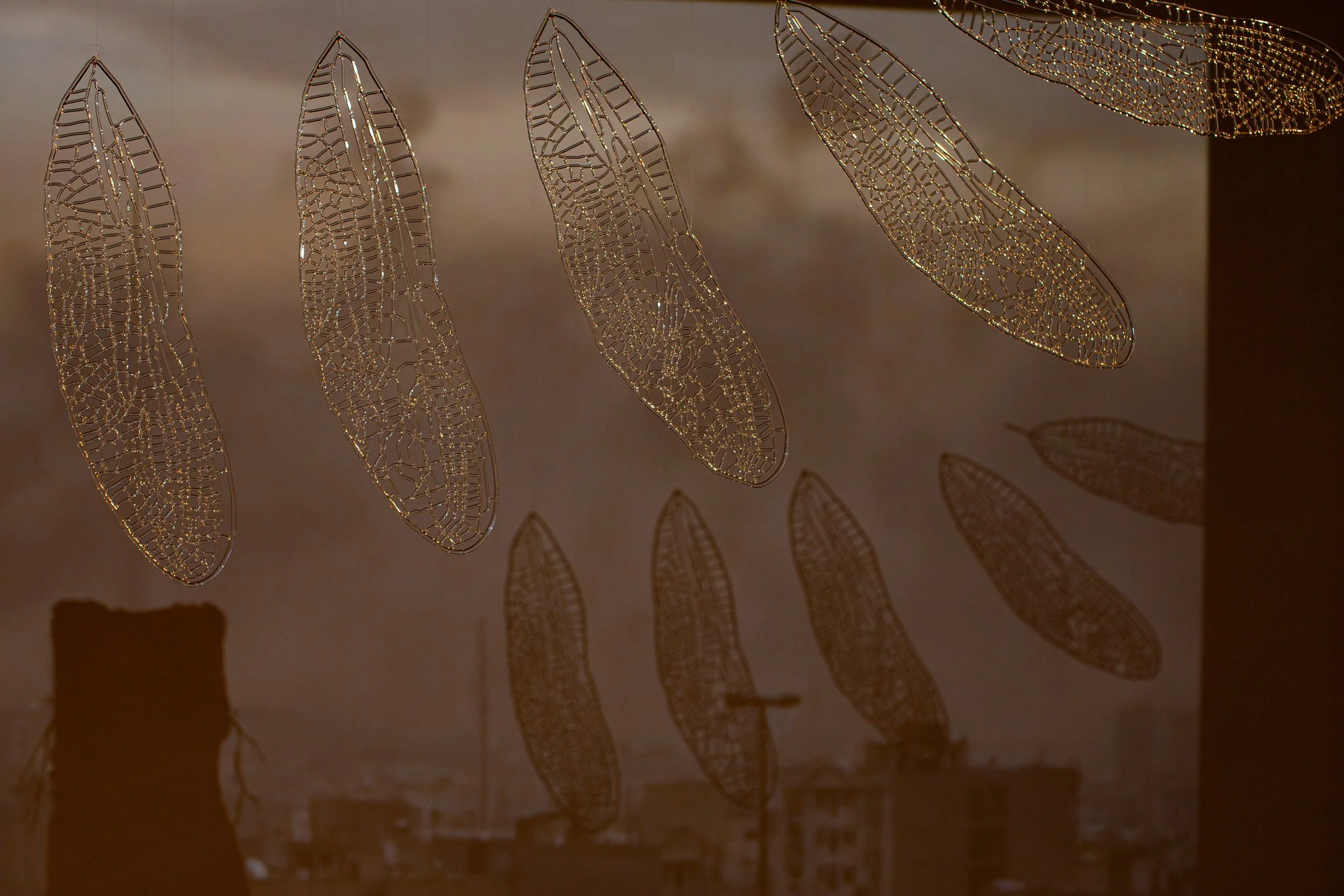
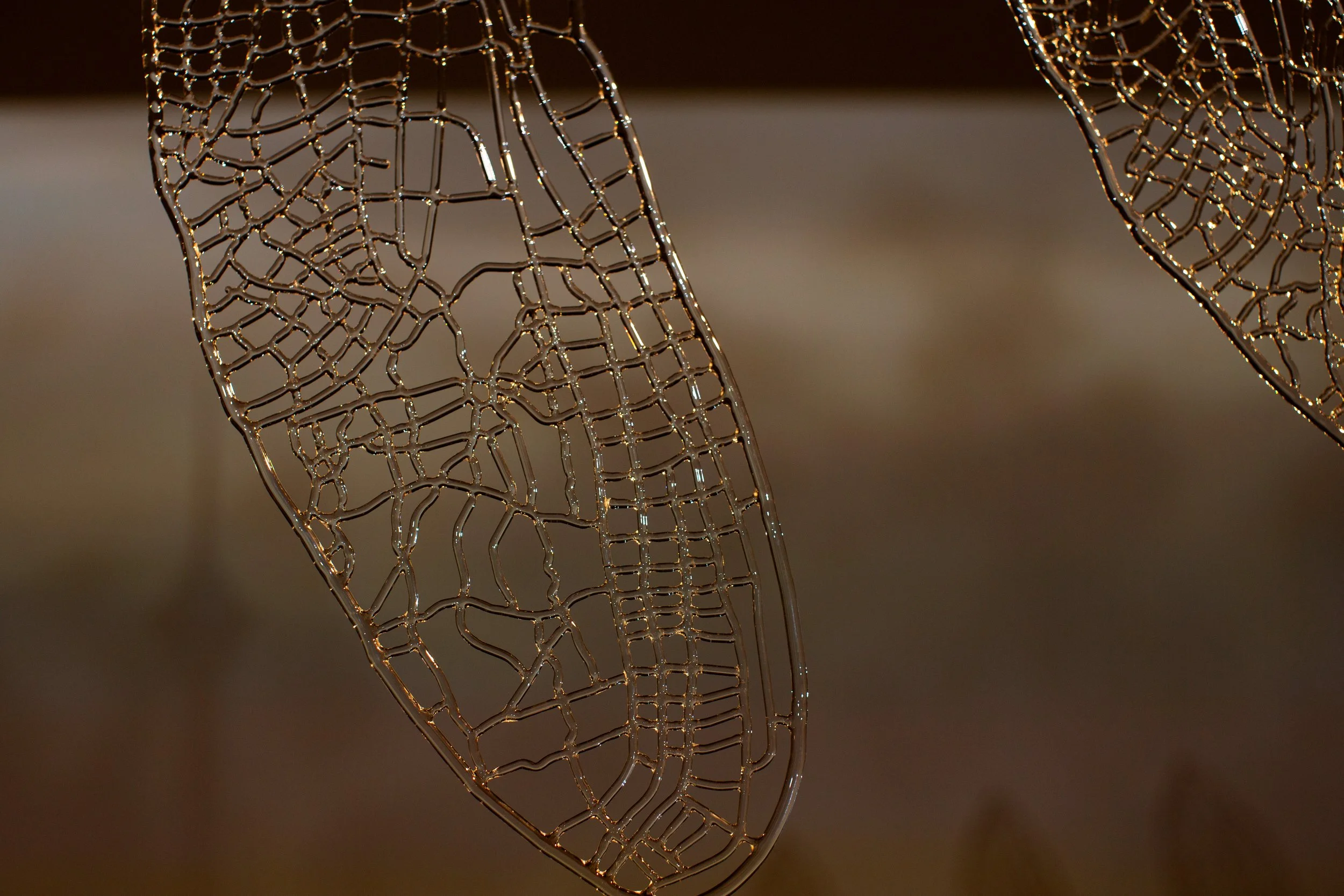
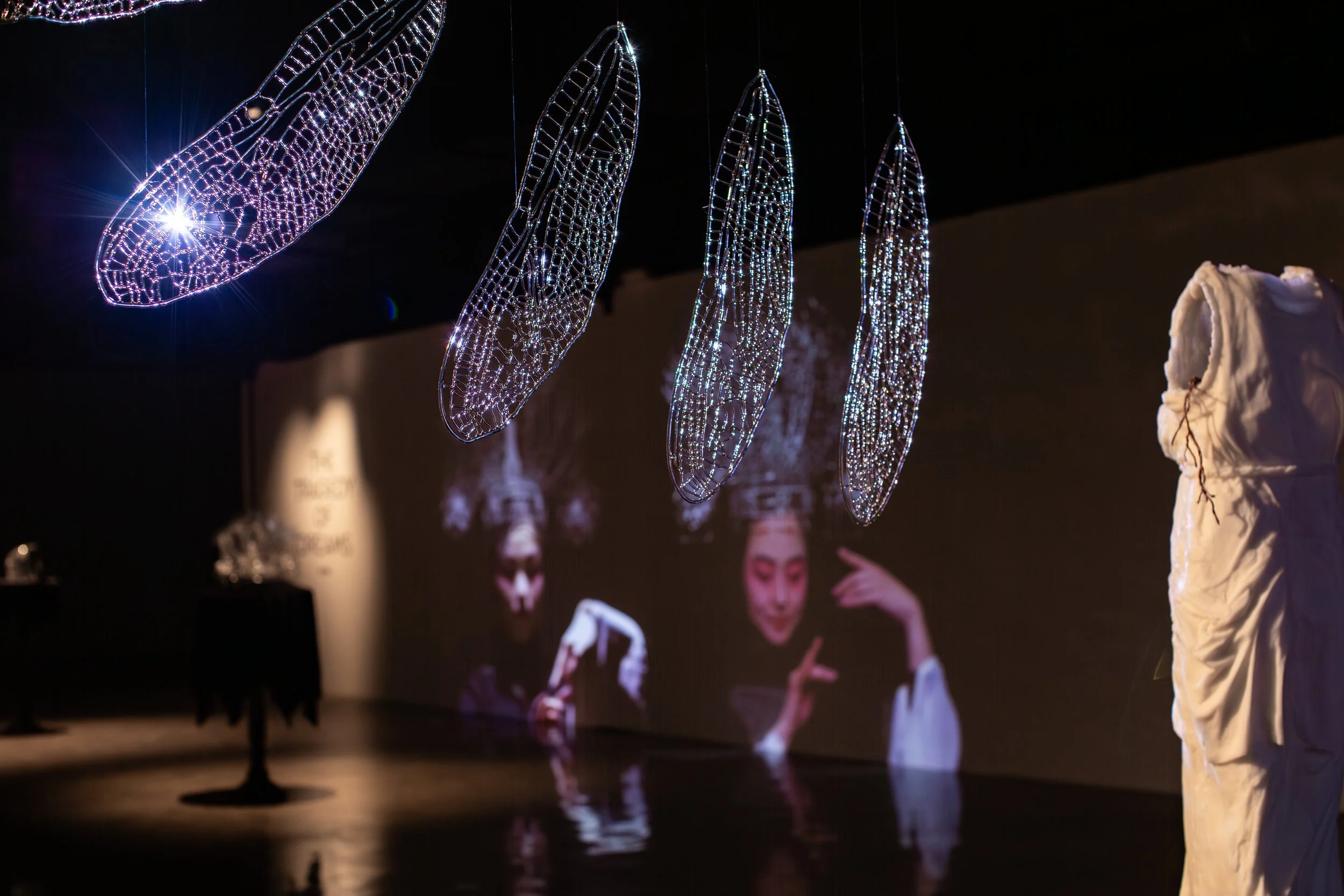
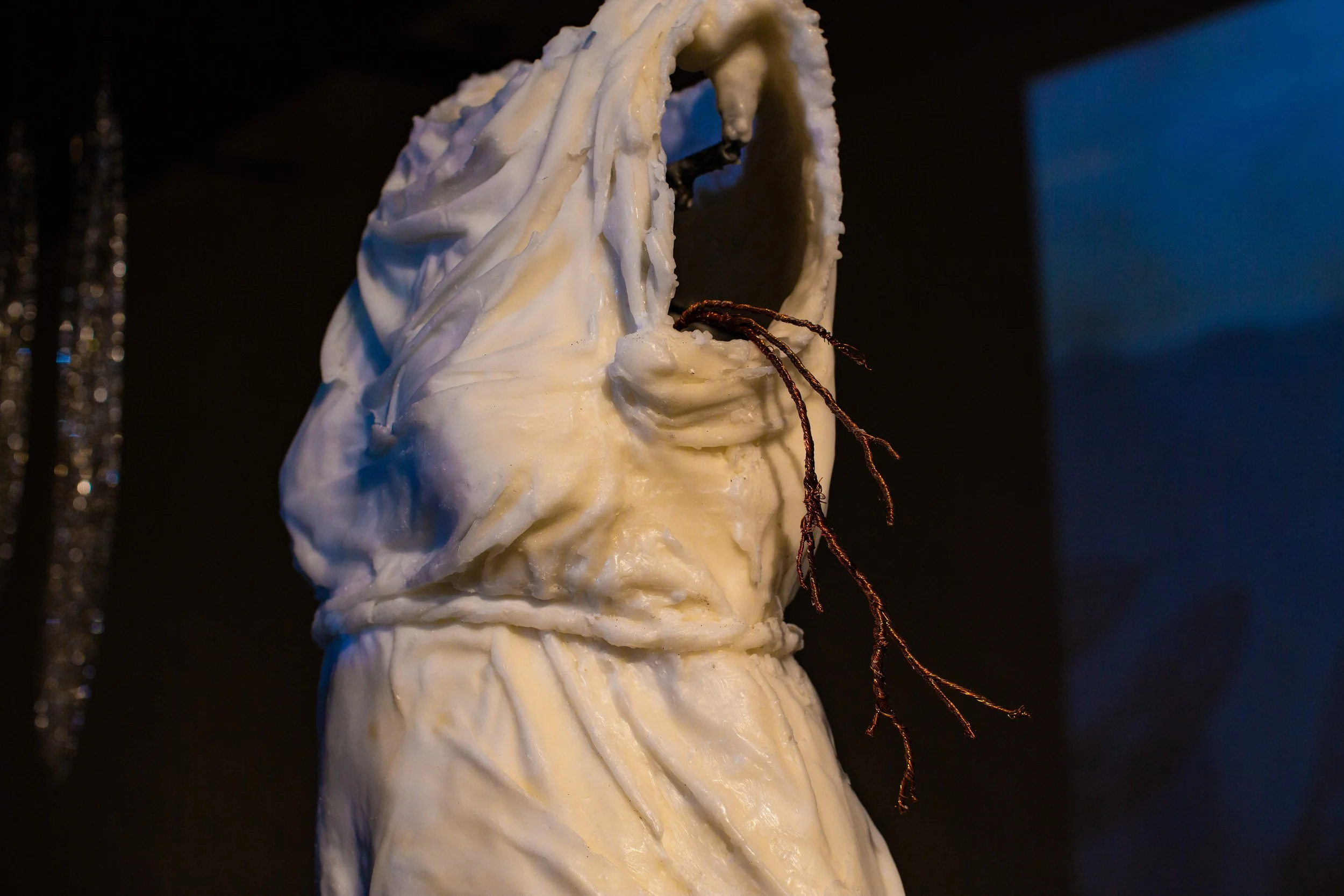
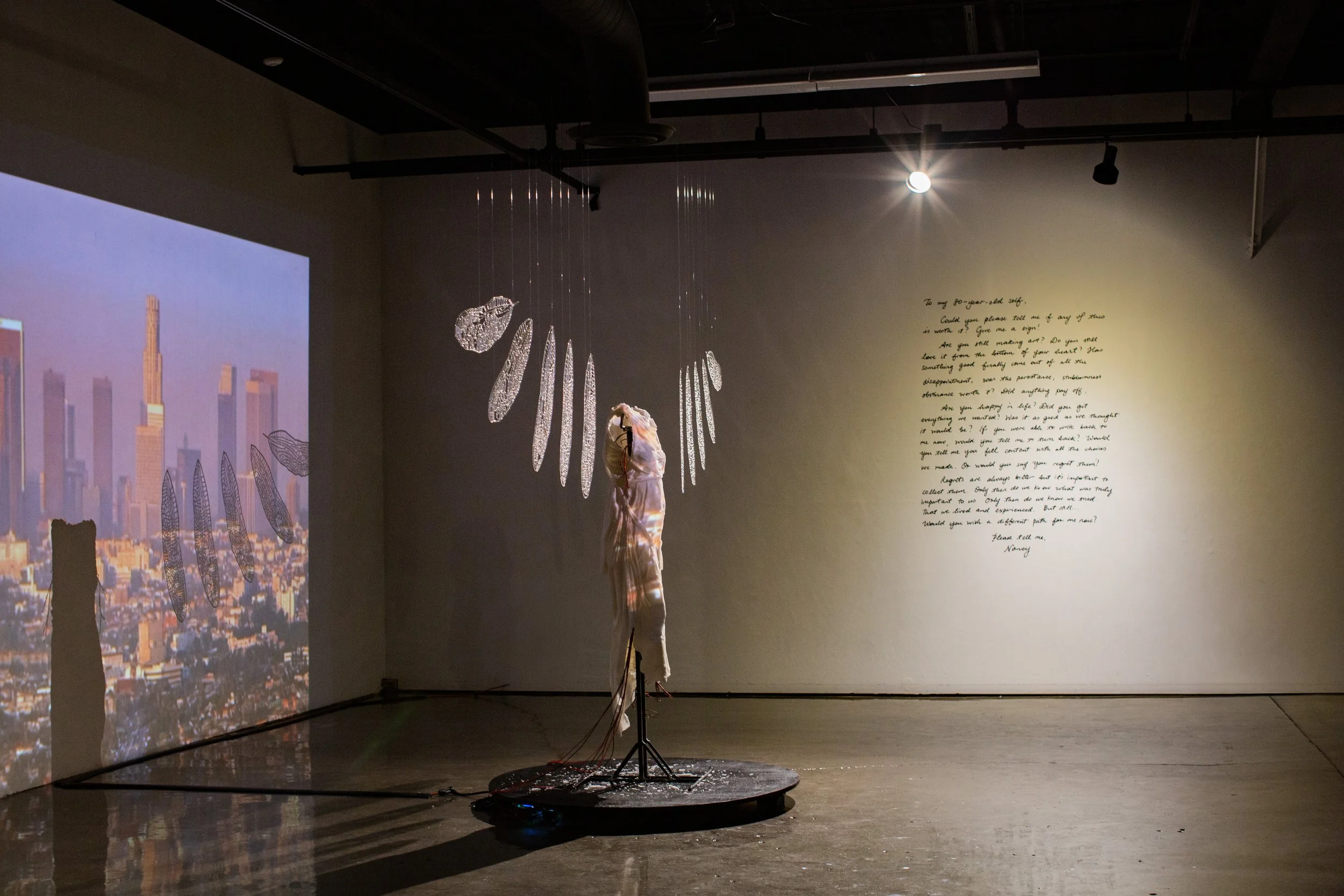
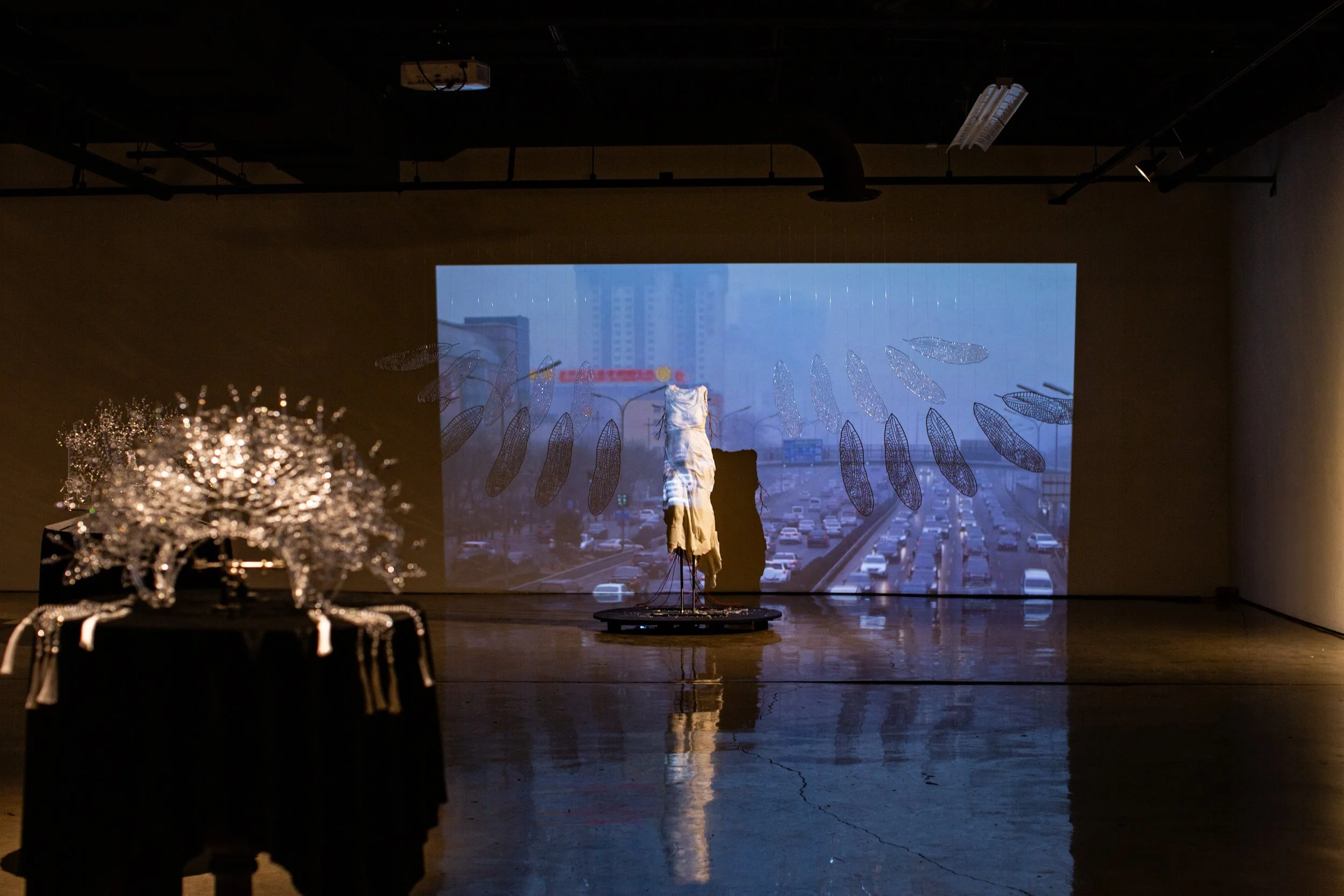
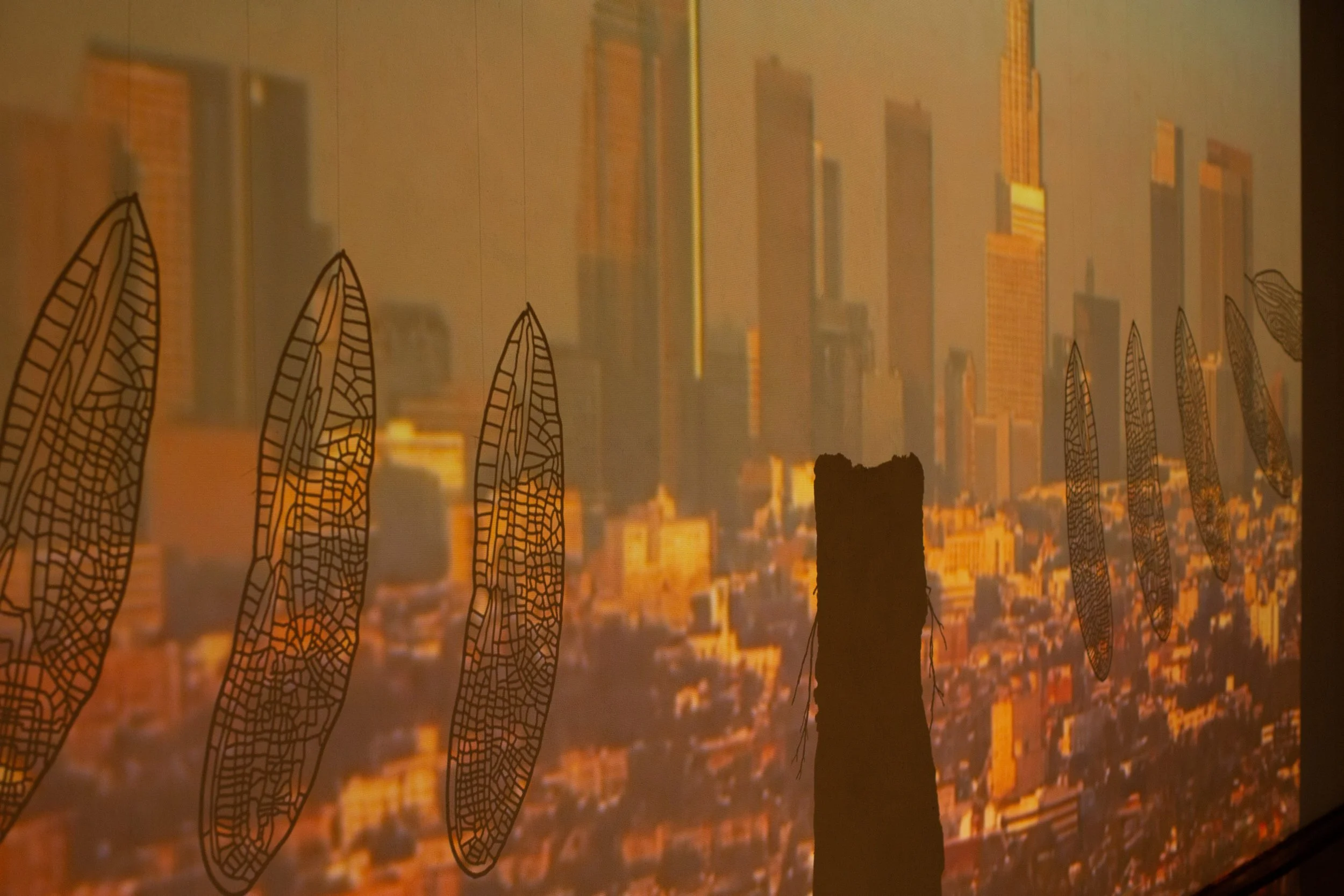
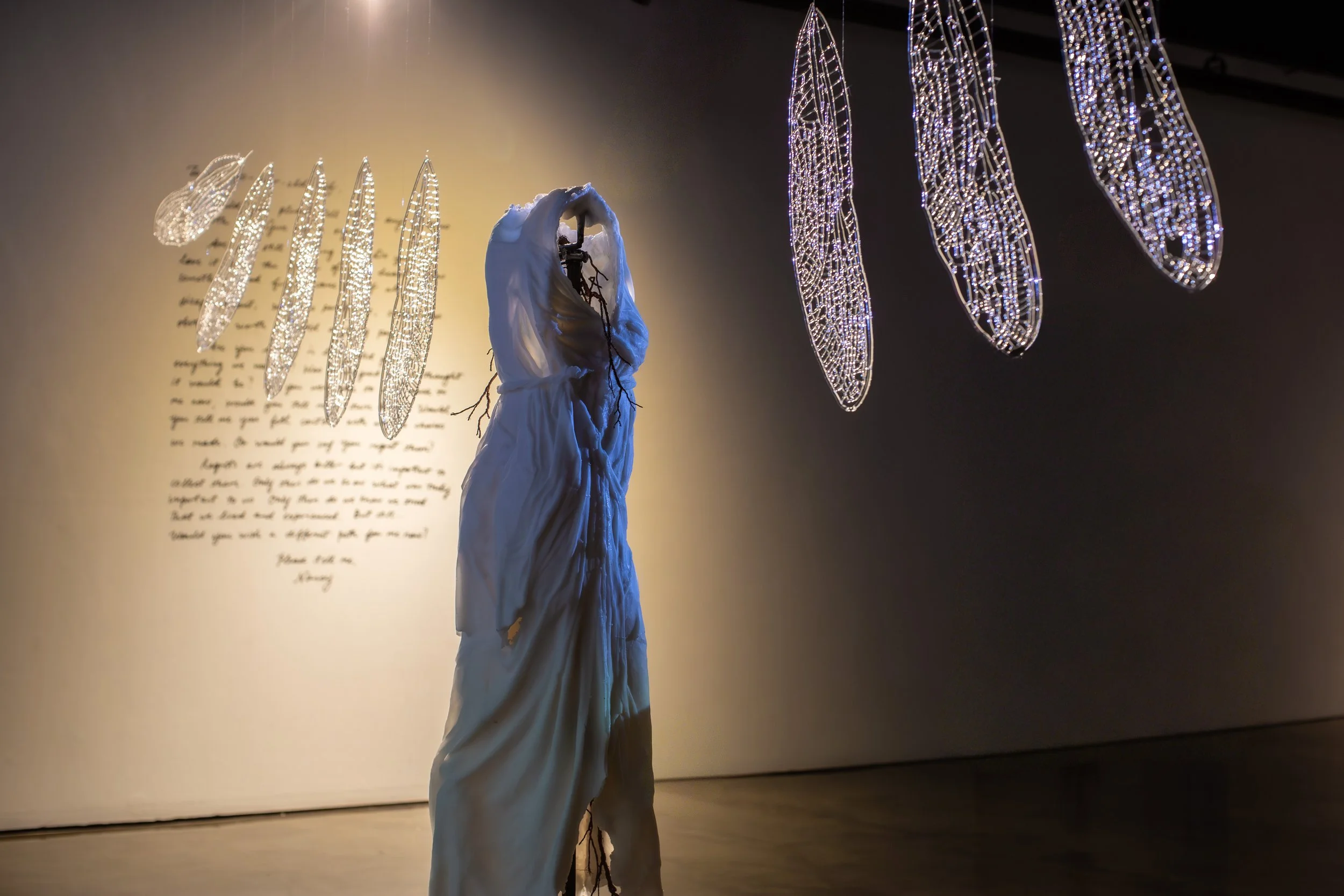
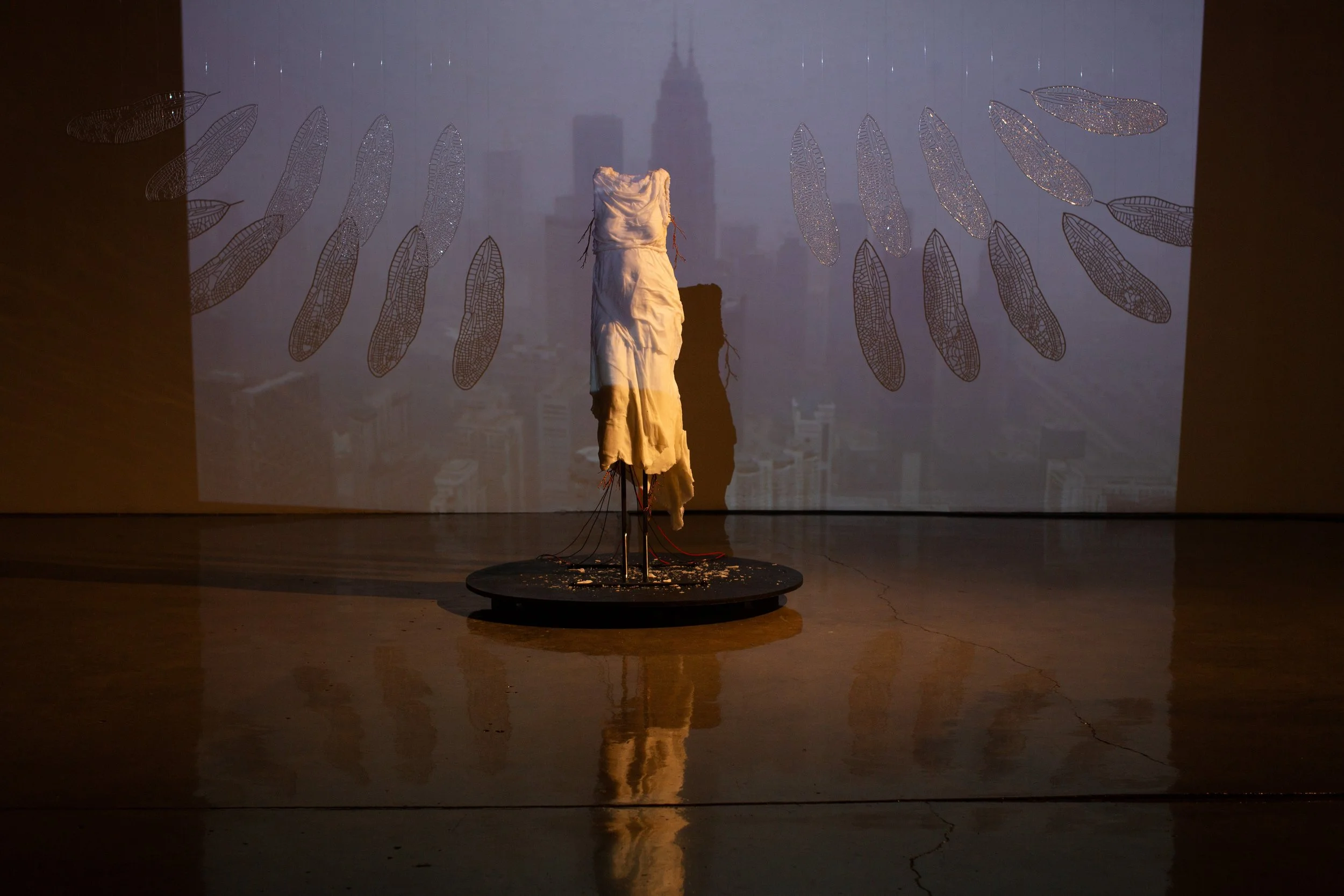
In this reworking of Icarus II, a number of layered details have been introduced. The wings, composed of flameworked glass elements shaped like dragonfly wings, replace the traditional feathers of the myth. Embedded within each wing is a network of city maps; intricate linework that traces urban infrastructures from locations historically associated with industrial pollution, including Beijing, Harbin, Los Angeles, Eugene, Tehran, Seoul, London, and New Delhi. These cities are further activated through projected imagery of cityscapes taken from news outlets animated through AI, illuminating their presence across both the sculpture and the surrounding wall. As light moves across the surface, the body and wings cast shadows over the projected cityscapes, creating the illusion of flight, yet one that feels ominous as though the figure hovers not in triumph but in consequence.
The body itself is cast in paraffin wax, its draped form referencing the sculptural language of the Winged Victory of Samothrace. Embedded within it is a constructed “nervous system” made from repurposed copper wiring salvaged from electrical cords. These wires are connected to heat coils, allowing electricity to pass through the system and gradually warm the material from within. This introduces a time-based dimension to the work: the body is not static, but slowly deteriorates, softening and melting from the inside out.
This inversion of the Icarus myth is central to the work’s conceptual framework. In the original narrative, Icarus falls because the wax of his wings melts as he flies too close to the sun; his downfall a consequence of overreaching ambition. In Icarus II, however, the wings, now made of glass and structured through technological precision, do not fail. Instead, it is the body that begins to give way. The source of destruction is no longer external, but internal, carried through a system that mirrors technological advancement itself.