Ideal vs. Truth
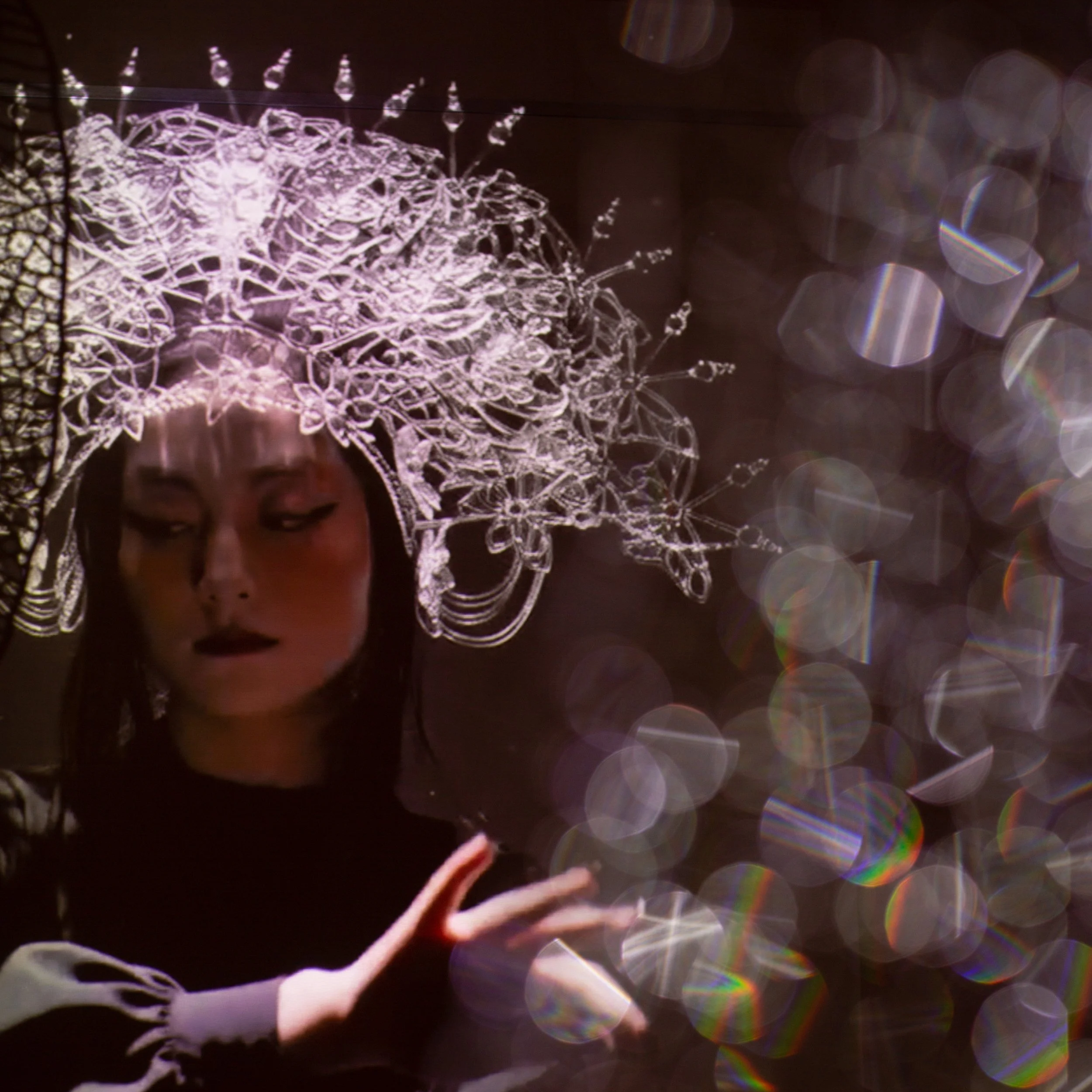
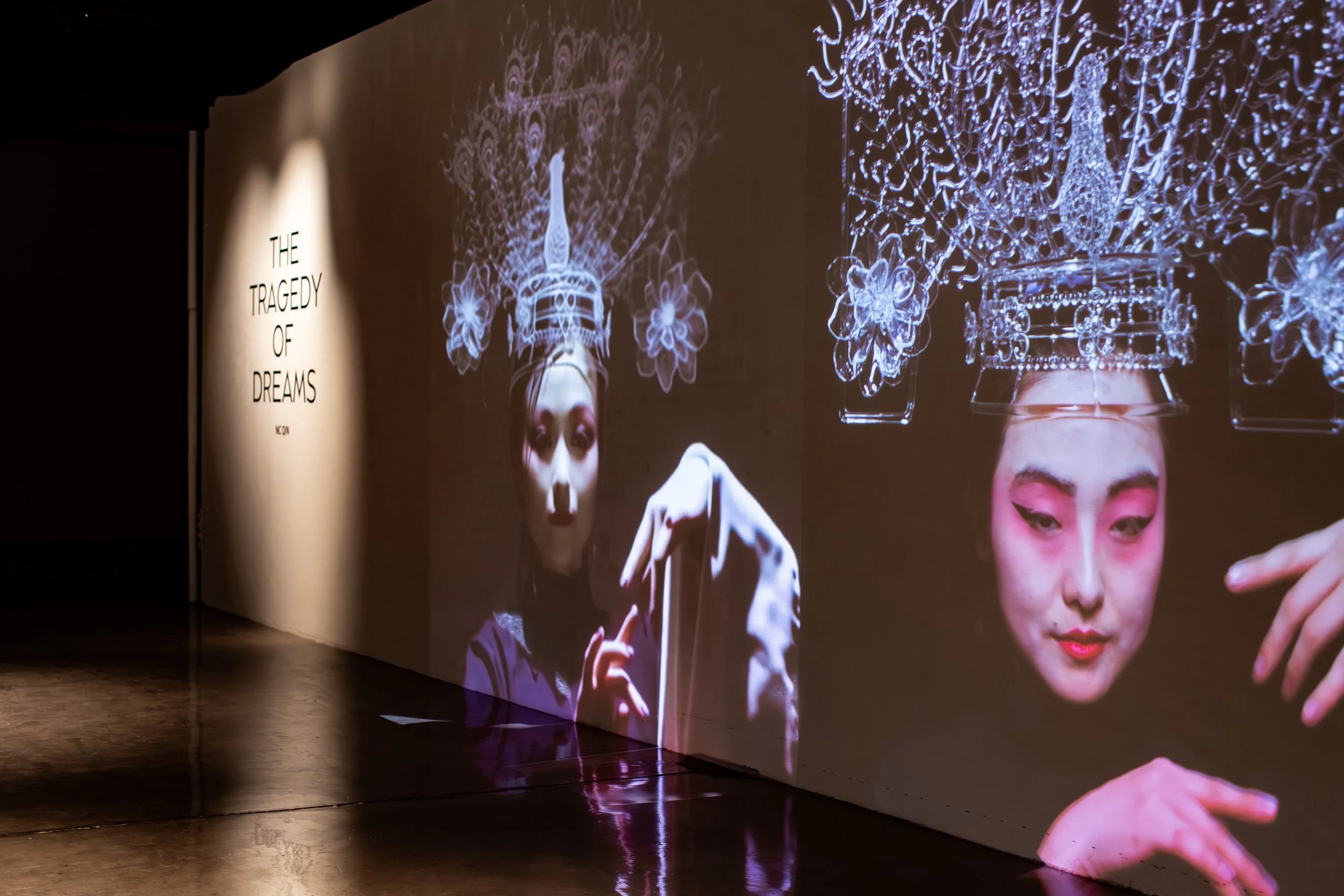
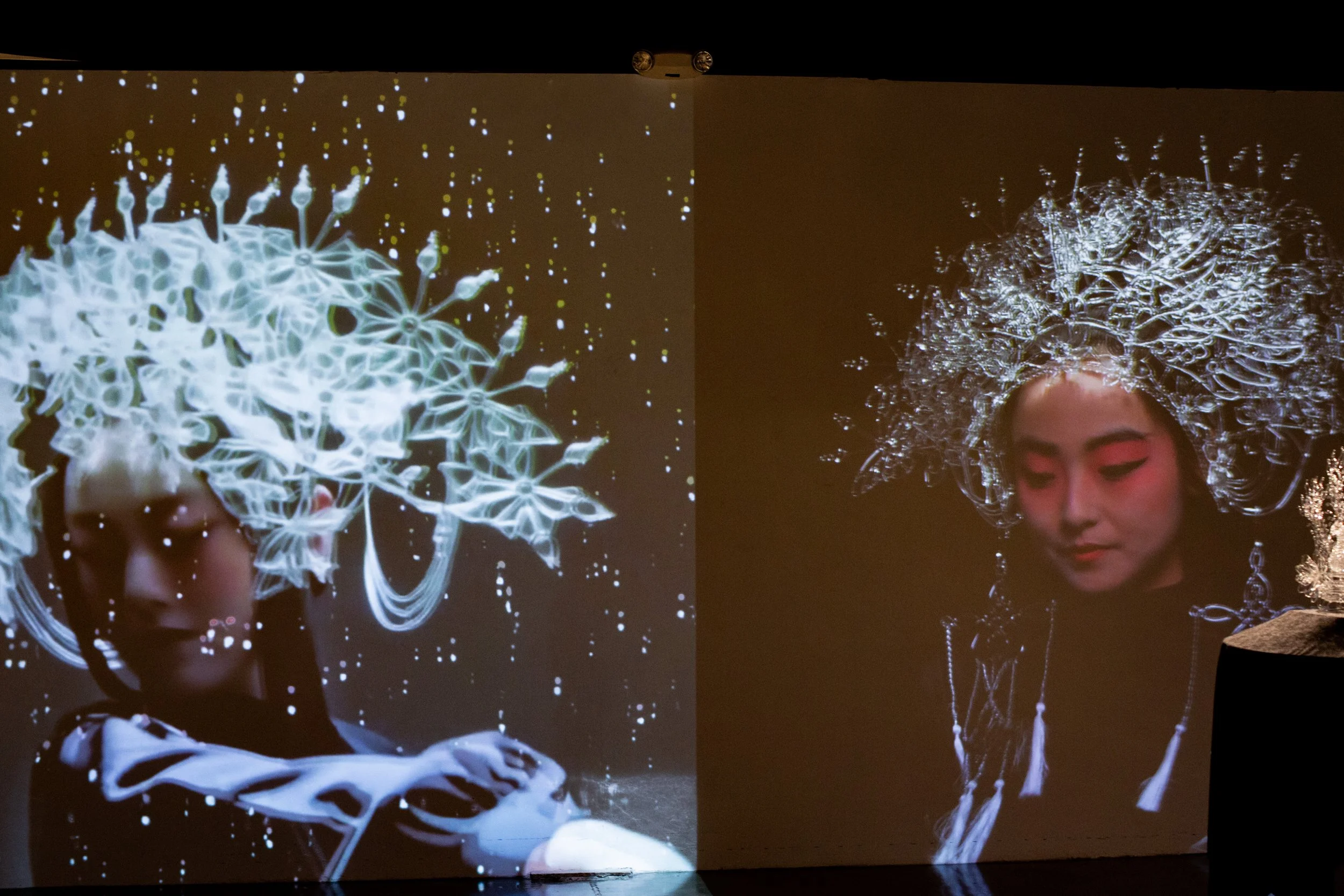
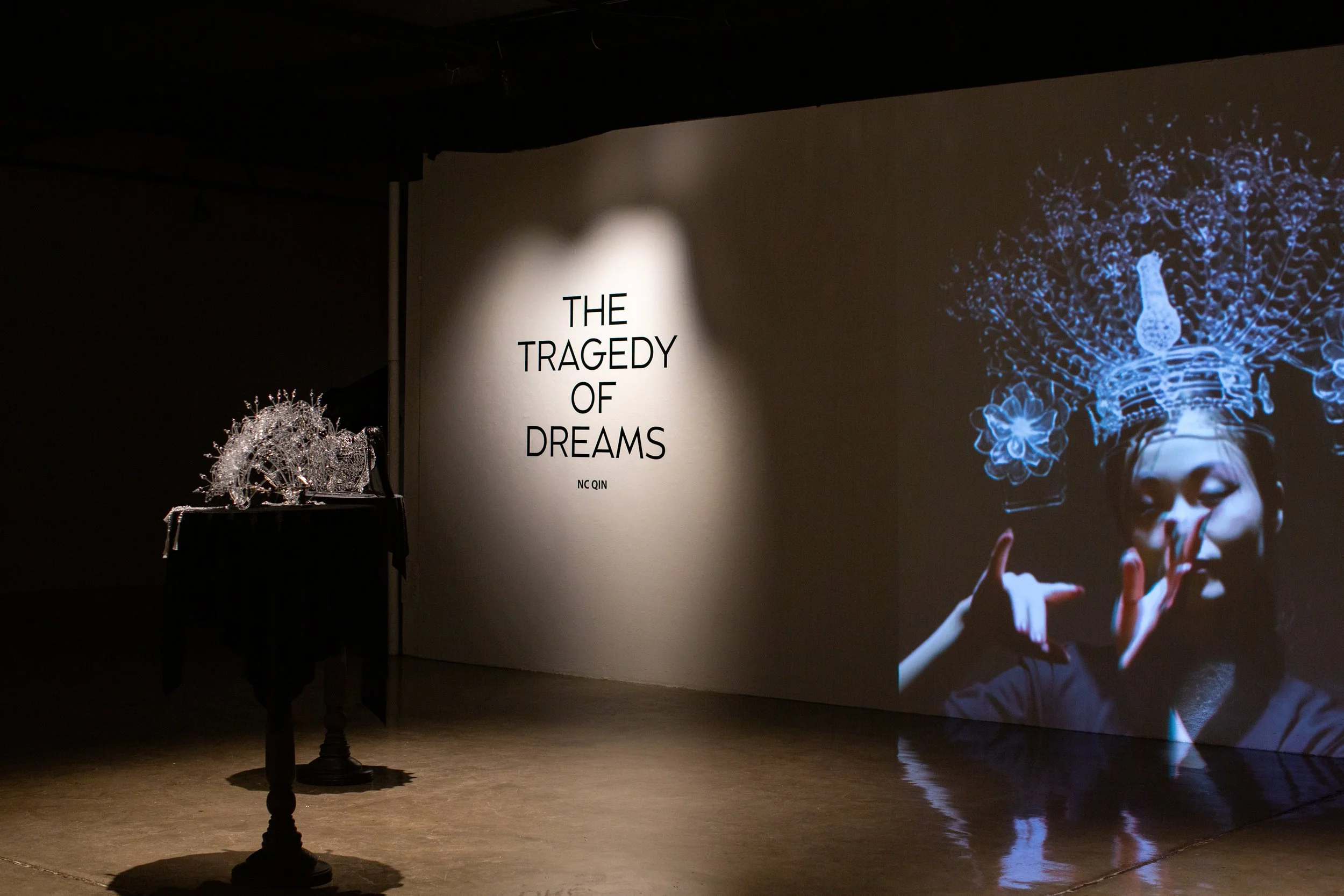
Ideal vs Truth, 2026
Dual Screen Projection, WAN AI Video generator, Performance
Seed Image taken by Benjamin Kumatsey
Video Performance shot by Greg Wendt
WAN operator by Gerry Li
Related pieces:
Crowns of Glass : Yang Guifei
Crowns of Glass : Wu Yunzhu
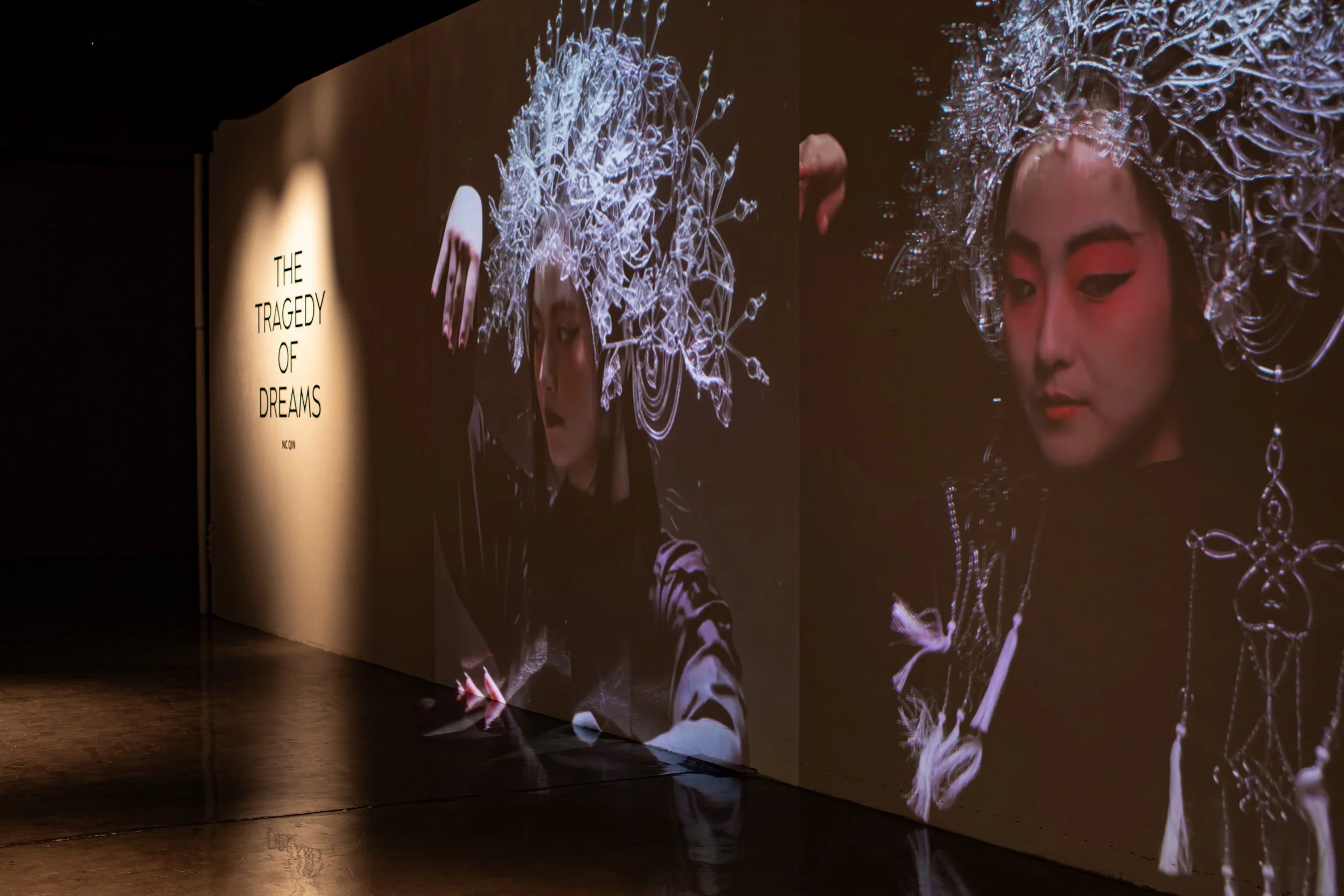
Ideal vs Truth integrates AI-generated video alongside a live performance as a deliberate decision, intended to heighten the tension, vulnerability, and psychological weight of wearing a real glass headdress. Generated from a seed photograph of myself wearing the piece, the AI-rendered figure moves with a fluidity and confidence that appears entirely unburdened by the object. Its gestures are composed, assured, as if relishing the experience of wearing the headdress, fully inhabiting the ideal of what the headdress represents. In contrast, the live performance, where I attempt to mirror these same movements while physically wearing the glass reveals a stark disjunction. My body is tentative, constrained, and acutely self-aware, governed by the persistent fear that the headdress may slip and fall.
This contrast establishes a dialogue between two states of being: the imagined and the lived. The AI figure comes to embody the idealised self: the version of who we believe we will become upon achieving a long-held ambition. It reflects a projection shaped by desire, confidence, and a certain imagined ease, perhaps even echoing the way our younger selves once envisioned inhabiting success. The live performance, however, disrupts this fantasy. It exposes the reality of inhabiting that ambition; the awkwardness and quiet anxiety that accompanies it. If the AI represents the ideal, then the performance insists on the truth: less composed, less certain, but authentic and undeniably real, grounded in the limitations and sensitivities of the human body.
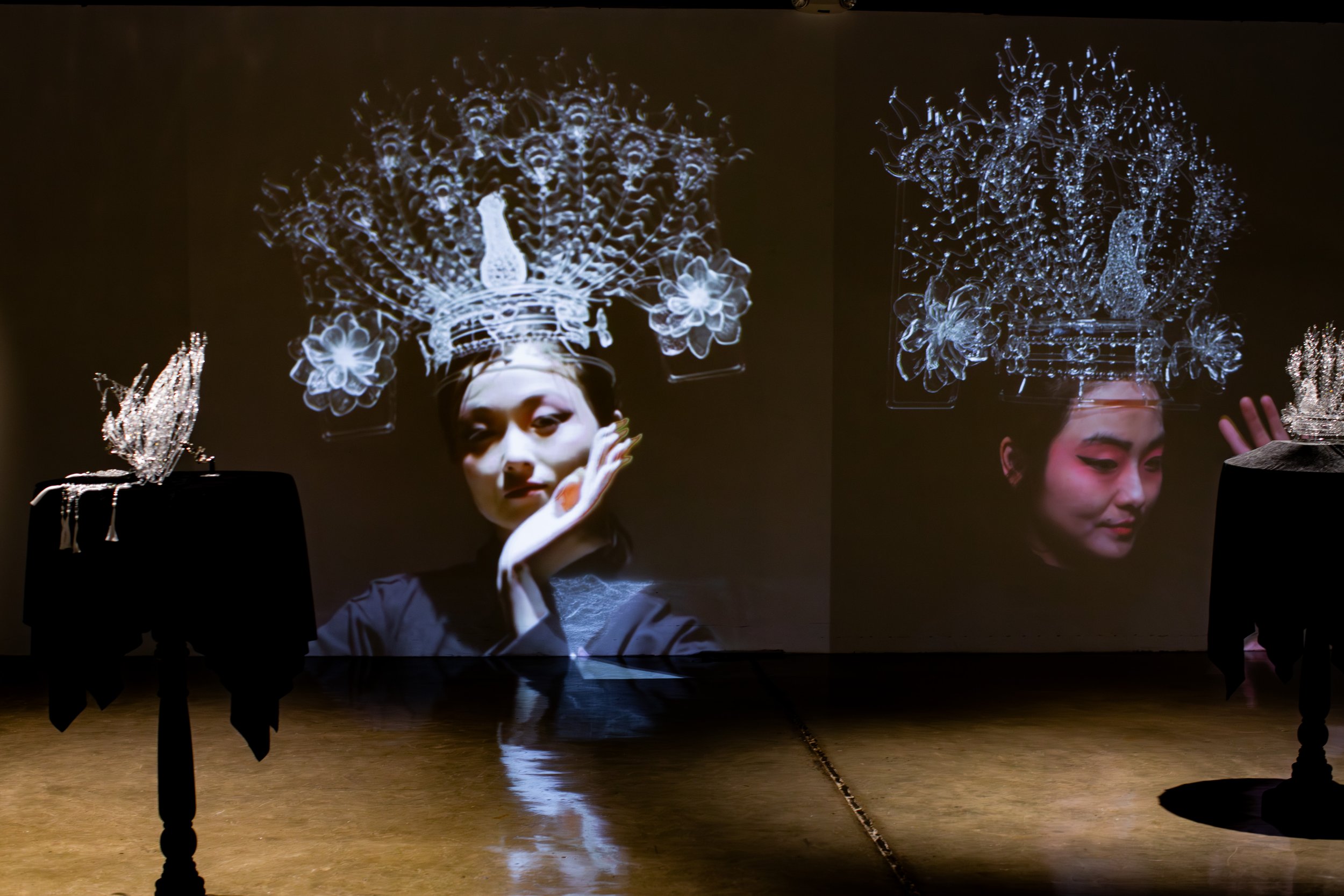
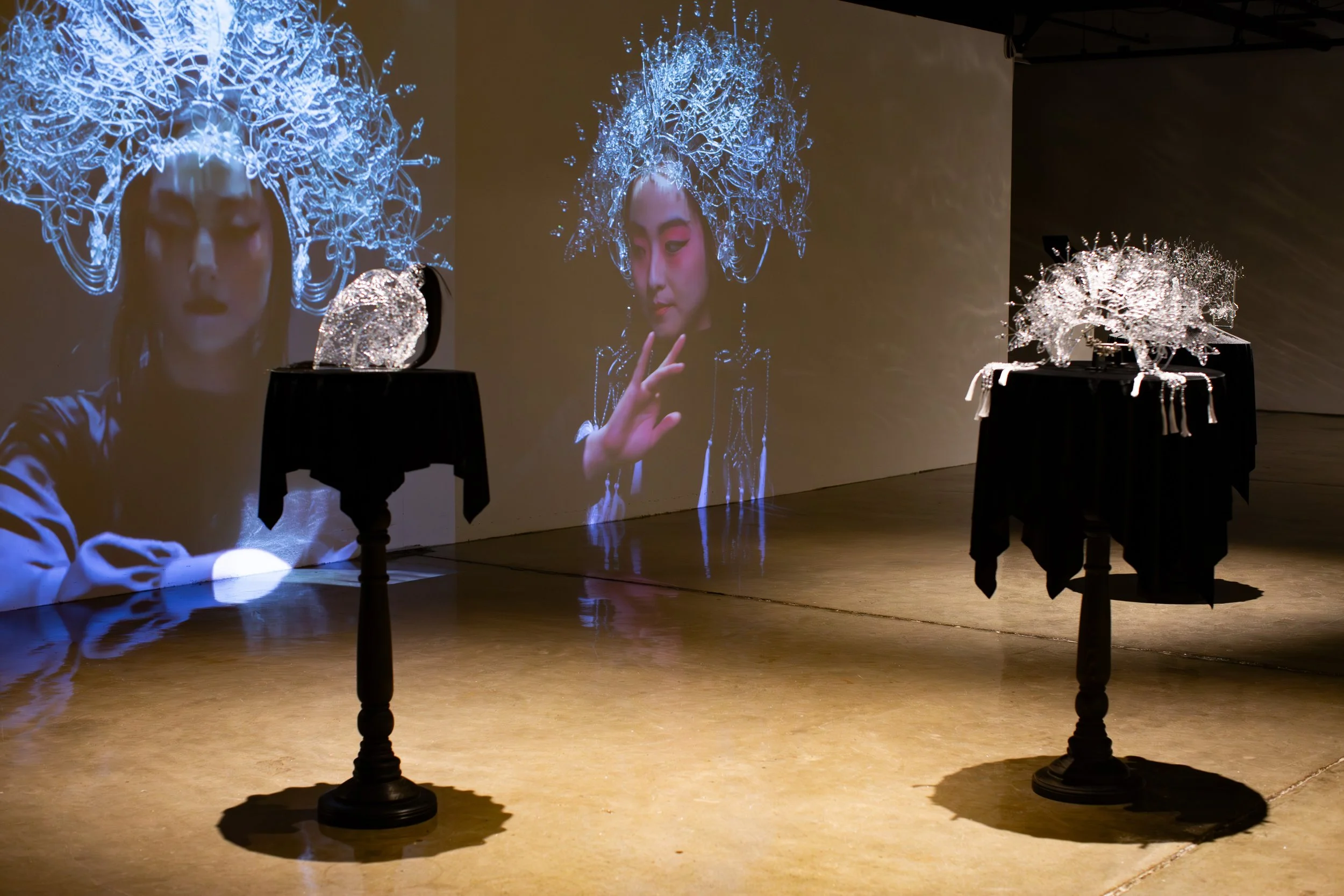
My engagement with performance in relation to glass does not stem from an identification as a performer, but rather from an interest in the body as a responsive medium, one that activates and animates the object. The body does not simply display the work; it enters into a reciprocal relationship with it. In wearing the glass, the body is forced to negotiate with its fragility, adjusting posture, movement, and awareness in real time. It is within this concert that the work comes fully into being, where the object is no longer static but alive, and meaning emerges through the tension between material, body, and perception.